Articles
Nov 13, 2025
Going the Distance: What Physical Therapists and Patients Should Know about Finishing Care Plans
Confession: I was once a terrible physical therapy patient.
That was almost 10 years ago. I was busy, stressed and dealing with lower back pain. I went to physical therapy primarily as an insurance requirement before I could get an epidural shot.
The therapy made my back feel a little better, but I didn’t take it seriously, never doing the prescribed home exercises. I was dishonorably discharged, taking with me a couple resistance bands I quickly tossed in the trash. I received the epidural a few weeks later.

Fast forward to 2025.
My lower back always will be an issue, but I know how to manage it most days. Earlier this year, however, I had a new problem arise: Significant neck pain that evolved into right shoulder discomfort that made it difficult to sleep. My orthopedic specialist prescribed physical therapy.
I, of course, chose a Select Medical outpatient physical therapy center this time. As an employee and someone who writes about clinicians and patients, I considered it an assignment in the wild. Go deep undercover as an aging, out-of-shape 50-something that can’t turn his head to the right. Brilliant.
Well, I’m here to report that the folks at the center I attended in central Pennsylvania did a wonderful job, first evaluating my issues, then ruling out a torn rotator cuff and, lastly, building a program to strengthen my neck and back muscles. It’s a plan I did at home in between sessions and still use parts of every day.
The improvement I experienced in the first two months of treatment was extraordinary. I could turn to both sides with only a little discomfort, and I had no lingering shoulder pain. Sleeping became easy again.
Unfortunately, I needed an epidural injection in my neck to get rid of the remaining inflammation. It eventually went away. So did I. After roughly four months of therapy, I left with a “homework” packet to use and an honorable discharge.
This experience was much better than the first one a decade before. Partially because of my therapists and partially because of me. I took it seriously, learned what I needed to do and, this time, I finished the plan of care with a full explanation of what to do at home.

Staying the course means recognizing value
Another confession: I didn’t really want to finish my scheduled sessions after the injection. But I was therapy-shamed by my wife and my boss. And I felt I owed it to my clinical team, which had worked diligently to get me better. So, I pushed through until the end.
The truth is, after several months of going to the center, I was done mentally. I knew the injection was coming and that physical therapy had pushed me about as far as I could go. I figured I could take it from there. My investigation was over. It would have been easy to quit.
That brings me to the second part of this piece: I’m not alone.
Wanting to drop out of therapy, whether it’s after two weeks or with two weeks remaining, can be a common feeling among ailing patients. They either can’t envision the endgame or are close enough to it that they don’t feel the need to continue once there has been improvement.
It’s something clinicians must deal with on a routine basis. So, how do they?
I asked a physical therapist whose center has a reputation for keeping patients engaged and possesses a low cancellation rate about the secret sauce. How do you keep patients from quitting earlier than they should?
The answer is simple: Patients must see value in the physical therapy they are doing. If they don’t, they are already on their way out the door.
There are multiple ways to demonstrate that value.
First, patients must experience some improvement to stick with the treatment: less pain, better mobility and increased function. Without tangible improvements, patients won’t want to waste their time.
Secondly, they must be challenged appropriately. If patients do the same thing each time they’re in the center, they’ll be bored. Most patients quickly learn the routine – bike for 10 minutes, do these stretches, use these resistance bands – so it’s reasonable to think they can do it at home or at a gym and save the co-pay and the hour-plus interruption of schedule.
Therefore, there must be something at the center that makes another trip worth it. Maybe it’s some type of manual therapy or a specialized piece of equipment or a therapist who invents games to snap the monotony.
Genuine interaction gets the best reaction
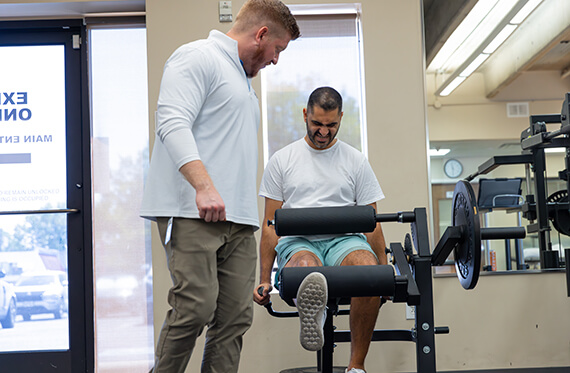
Nearly as important as seeing improvement and being challenged, patients must feel valued within the center. The reality is therapist teams are busy and, to see everyone, multiple patients are often booked at the same time. Sometimes, the clinician can become more traffic cop than therapist, instructing patients and logging information but not being particularly interactive. Do that too much, and it will lose the patient.
The clinician I spoke to said he’s noticed a pattern. Patients who are overlooked one week due to overbooking often cancel the next week. They are just not as invested as they were because they don’t feel valued, so they devalue their own therapy. That’s why it is important for clinicians to make connections with each patient, to get to know them as people and not just conditions that need to be treated. And then to instruct them personally; to be a partner in their recovery.
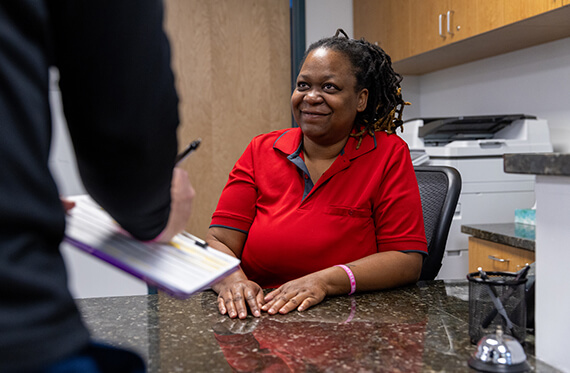
Building that relationship also leads to trust – if the clinician is willing to listen and ask better questions. Not, “How are you feeling?” But, “What did you accomplish this week? What gave you trouble?”
That communication must travel both ways. For patients to get full value from their physical therapy experience, they need to share what they are feeling physically and mentally, re-evaluate their goals and articulate them to the clinician. The physical therapist’s job is to challenge the patient, but it is the patient’s responsibility to keep the clinician updated on how those challenges are going.
That means if the patient is dealing with an increase in pain or soreness, it must be relayed to the physical therapist. One of the more common reasons for patients to stop therapy is if they are hurting too much. That is never the goal of a good plan. The purpose is to decrease pain and improve function, not to push through excessive discomfort. A quality therapist will immediately pull back and re-evaluate the plan if pain increases or if the patient is not improving.
Feeling better is the perfect reason to keep going
When that pain is minimized or eliminated, however, clinicians argue that’s the best time to keep pushing forward with physical therapy. Because that’s when patients build strength and work toward preventive measures that can help stave off a return to therapy for the same issue a few months later.
Human nature, though, makes it more likely for someone who is feeling better to stop treatment. We tend to live in the moment. So, why keep paying and keep scheduling when the pain is gone?
It’s a challenge for clinicians to explain the benefits of continuing care beyond the point of no longer having pain. It’s also why clinicians feel the final session is often one of the most important. That is when the future care plan – the ongoing homework – is assigned.
And if a patient exits early, they won’t receive that benefit. It’s like bouncing out of a concert before the encore just to beat traffic. You can still have a good time, but you don’t get the full effect of the production.
I almost didn’t finish my therapy course. But I am glad I did. It’s important to have a direction for stretching and exercising when you no longer have the supervision of a clinician.
Besides, I needed to redeem myself from 10 years ago, when I dropped the therapy ball and didn’t know how to properly pick it back up.
Clinical contribution to this blog provided by Physical Therapist Mark Franks.