Articles
Jul 29, 2025
Juvenile Arthritis: Putting the Play Back into Life
Thought of as a disease of aging, arthritis doesn’t discriminate. According to the Arthritis Foundation, nearly 300,000 kids and teens in the U.S. have some form of arthritis.
Juvenile idiopathic arthritis (JIA) is a group of chronic inflammatory arthritis conditions impacting children. It occurs when the body’s immune system attacks its own cells and tissues and is often systemic in nature. By medical definition, JIA affects one or more joints for at least six weeks in a child age 16 or younger.
Juvenile arthritis symptoms can vary, and as a parent you might be asking yourself what you should be looking for in your child as it relates to JIA.
- Pain – While your child might not complain of joint pain, you may notice that he or she limps — especially first thing in the morning or after a nap.
- Swelling – Joint swelling is common but is often first noticed in larger joints such as the knee.
- Stiffness – You might notice your child appears clumsier than usual, particularly in the morning or after naps.
- Fever, swollen lymph nodes and rash – In some cases, high fever, swollen lymph nodes or a rash on the trunk may occur — which is usually worse in the evenings.
Most typically, the joints affected are the knees, hands, feet, ankles, shoulder and elbows. As you can imagine, for children living active lives, any impact on movement of these joints can greatly impair their ability to be part of daily play, community activities and family life.
Getting a diagnosis
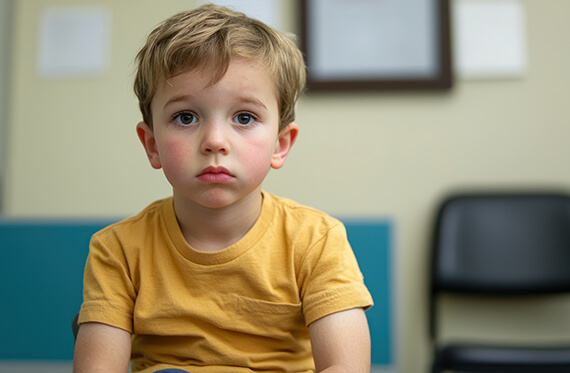
When consistent concerns arise about the possibility of arthritis for your child, an official diagnosis can lead you in the right direction of care.
Getting a diagnosis can be difficult as joint pain can be caused by many things, but starting with a pediatrician or primary care provider is a good first step. No single test can determine if arthritis is present, but a series of tests can rule out certain conditions that produce similar symptoms.
A complete examination may include questions about family medical history as well as the child’s medical history, including when symptoms started and how long they’ve lasted. A physical exam will look for signs of JIA which can include:
- Limited range of motion
- Rash
- Eye symptoms
- Joint swelling, tenderness or pain
With a solid diagnosis in hand, you may get referred to a rheumatologist who is a specialist in autoimmune conditions that affect the muscles, joints and bones. Imaging tests such as X-rays, CT scans and MRIs may be used to look for joint damage, and laboratory tests may be used to look for inflammatory markers.
A second option for diagnosis can come from a rehabilitation specialist who can perform testing for a differential diagnosis. The results are then shared with primary care providers for consideration, official medical diagnosis and treatment.
Enter the rehabilitation experts
Whether coming in with an official diagnosis through a referral or seeing a rehabilitation expert first, including specialized arthritis/joint health therapy services as part of the treatment for JIA is a must-have.
The overarching goal is to get your child back to being a kid or to catch them up to where they should be to continue playing with and keeping up with their peers, having access to home and school environments and participating in sports and activities safely.
In addition to the main goal, rehabilitation experts work one-on-one with you and your child to determine more individualized goals to pinpoint areas of focus. These areas include:
- Decreasing pain and swelling
- Improving range of motion, flexibility and strength
- Improving gait (pace or manner of walking)
- Managing flare ups
- Educating on condition and resources
Speaking the language of your child
Juvenile arthritis can have a lifetime impact for the child and you as their parent. That’s why it’s important to start off right in the rehabilitation journey.
Mindset is important, so reaching the child where they are and in ways they can understand can take the negative out of treating the condition. Through a play-based approach and motivational interviewing, a therapist can learn more about how the condition is affecting your child and the tools needed to help them engage in treatment.
What are their interests? Do they like to build things? Are there characters from TV or movies they relate to? Do they like puzzles or analytical problem-solving? Do they play certain sports?
Getting to know them allows rehabilitation specialists to build a program around their interests and keep them participating in the tasks that help them improve their joint health.
Once a strong relationship is established, the work to progress really begins. Measurements are taken through objective testing to establish how many joints and what muscle groups are being influenced by arthritis and how much motion is lacking. Therapists look at muscle strength, swelling, pain — all to target where advances and momentum can be achieved.
Through active listening, therapists can understand how children express their individual limitations. For example, when they speak of muscle soreness, are they talking about symptoms of the arthritis or what they are feeling as a result of the work they are putting in to target the arthritis.
Arthritis treatment
In many cases, medication management (prescription drugs, over-the-counter-medication, injections) of JIA is recommended by arthritis specialists or providers. Rehabilitation experts work well with providers on the care team to make sure medication management is complemented by their movement plans.
Combining understanding of how rehabilitation works on the body along with your child’s interests, physical therapists find creative ways to implement a treatment plan that speak to pediatric patients.
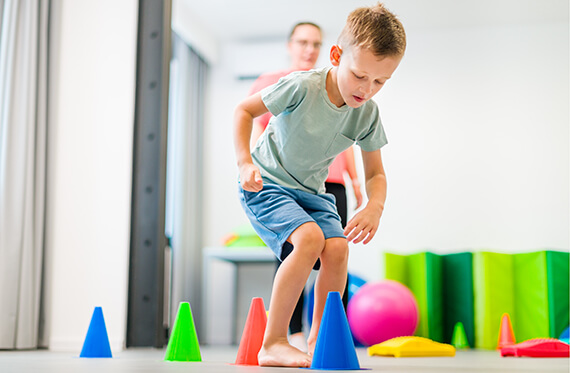
That could mean instead of using a treadmill, children are asked to participate in obstacle courses that include exercises needed to work the areas where they need to strengthen. Competitive challenges may be included to bring out their spirit of play, while working the muscles and joints that are going to benefit from activity.
For stretches, instead of standardized movements given to adults, kids might be asked to lay on their belly to do an activity they love with an ankle weight on their foot so, while they are distracted, stretching is actually taking place.
Play-based therapy encourages their “I want to do it myself” nature. It’s a win-win because the child feels independent in their actions while the therapist is getting them to accomplish things that are enhancing their health and wellness with arthritis.
Team approach
When taking part in a rehabilitation plan at an established center, there are many opportunities available to help your child improve. Centers often have a combination of experts on the team — physical therapists, occupational therapists, speech-language pathologists — who work in harmony to address every need of your child.
If JIA is impacting the wrist or the fingers, especially in children who are in daycare, preschool or grade school where they are expected to do a lot of fine motor activities with their hands (handwriting, shape sorting), occupational therapy (OT) experts are pulled into the treatment plan. They provide a specialized focus on how the hand and wrist are working with arthritis impairment and create exercises or use splints, pincher grasps or other tools to help work around the challenge.
OTs are also fantastic resources for children who are struggling with separation anxiety or executive functioning tasks — cognitive processes that help to plan, organize, prioritize and manage tasks to achieve goals. These skills are crucial for everyday life, including learning, working and social interactions.
Arthritis flare ups and function
The goal of rehabilitation is to trend in an upward progression model. Symptoms and care will not travel in a straight line, but aim instead for improvement, whatever path that may take.
Working at home on maintenance exercise and activity is vital to success. The more parents encourage their children to carry their therapy methods home with them the better.
Home exercise shouldn’t feel like a chore, but instead be taken as an opportunity to maximize results between rehabilitation appointments.
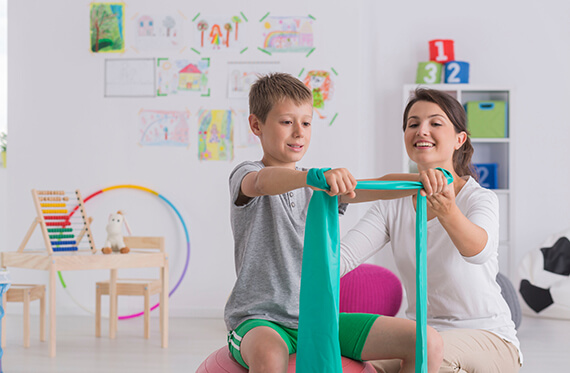
Therapists can work with parents to understand the parts of the body that need to be stretched or worked. Home activities targeted to those areas can include going to playground, taking walks, parent/child stretching times or creating physical challenges in the backyard.
JIA is a condition that comes in peaks and valleys. The ups and downs for your child mean different approaches when it comes to rehabilitation.
If your child is riding a wave of very few symptoms, therapy appointments may be cut back or go longer in between, using exercises at home to maintain. When symptoms start to flare up, therapy appointments can be scheduled more regularly to get back on track.
This flexibility in treatment allows children and parents to utilize care when it is needed most, while still managing a normal routine of kids being kids.
Easy to apply concepts for flare ups are evaluation of lifestyle. It’s important for all children, but especially those impacted by JIA to hone in on these key daily factors:
- Are you getting enough sleep?
- Are you taking in good nutrition for your body and its needs?
- Are you moving through exercise and meaningful physical activity?
- Are you following your medical and physical therapy treatment plan?
Important to realize is that while JIA can impact daily life, it doesn’t have to mean limited living for your child. If they want to do sports, they can participate in sports; it may just mean understanding the way their JIA impacts their body.
If they are experiencing a flare up, parents and coaches may be asked to work together to find ways for them to still be part of the team but maybe in a more limited fashion until the flare up goes away. For example, if they want to play softball, then play softball. If a joint goes into the red zone, then that day they can be the coach’s helper, walk the bases or be the team cheerleader on the bench.
Advocate for your child
JIA can be difficult to diagnose. No two patients are the same and the condition can mimic symptoms of other common conditions.
Parents should seek out a medical care team that works with them collaboratively for the best results of the child. Ask questions, seek answers and find a care environment that supports the health of your child. If you are not getting the assistance needed, shop for providers to build the best team.
A good rehabilitation program works with the providers you have chosen for the care of your child. Marrying a medical management program with a motivated movement plan equals strong results for your child in an environment where they can flourish.
Lean into the connections and resources your care team can share with you, including support groups, trusted providers and specialized expertise.
Any child with JIA should have a full life and see a bright future like any other child. Surrounding them with an environment of encouragement and the right health care professionals can place your child on the path to success. The path may not be straight, but with the right tools, any destination they want is within reach.

Clinical contribution to this blog provided by Pediatric Physical Therapist Emily Mullen.