Articles
Sep 25, 2025
A Potential Torn ACL? What to Know, What to Do and How to Get Back to Sports
It’s officially fall, which, unofficially, is the season of torn anterior cruciate ligaments (ACLs).
With apologies to basketball, which shreds its share of ACLs annually, the high school and collegiate sports most connected to knee injuries are typically played in autumn: football, boys’ and girls’ soccer and girls’ volleyball.
Each year in the United States, 200,000 to 250,000 reconstructive surgeries are performed on the ACL, a ligament that connects the femur (thigh) and tibia (shin) bones and helps stabilize the knee joint.
Damage to the ACL – a full or partial tear – accounts for nearly half of all knee injuries in the U.S. It occurs more often in women than men, and roughly 70% of all ACL injuries are of the non-contact variety. The culprit is often awkward or unanticipated movements, such as overstriding for a soccer ball, changing direction quickly in the open field or landing off-balance after jumping for a pass.
So, what happens after an athlete collapses with knee pain? What are the next figurative steps?
“If you suspect an ACL injury, you need to see a sports medicine physician,” said Kevin Wilk, associate clinical director for Select Medical and Champion Sports Medicine in Birmingham, Alabama, and a renowned expert on ACL reconstruction rehabilitation. “You need a sports medicine orthopedist to make an accurate diagnosis and offer a treatment plan.”
That diagnosis may confirm your biggest fear: Your ACL – and maybe other knee ligaments, too – are torn and you’re going to be sidelined for at least half a year and likely longer. This is when it is best to reach out to a sports medicine physical therapist to begin the process of rehabilitation as soon as possible. An accurate diagnosis and early intervention are the jumping off points for ultimately springing back to competition with a reconstructed knee.
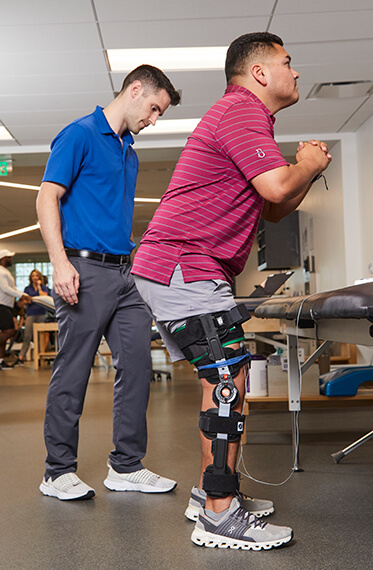
Getting prepped for ACL surgery and recovery
Following the diagnosis of a tear, there will be some downtime before surgery occurs, ranging from days to weeks. It’s an extremely important period for an athlete dealing with an ACL injury.
Three parts of the traditional RICE method – rest, ice, compression and elevation – work here, but Wilk cautions about the “rest” component. Simply resting the affected leg, and not moving it or doing light exercises, is counterproductive. For best results post-surgery, a patient should work to reduce swelling while also maintaining range of motion, preventing muscle weakness and restoring normal gait and movement.
“After that diagnosis, go home, start icing the knee and start doing some exercises, believe it or not. Because you don’t want your quads to atrophy,” Wilk said. “You don’t want your knee to get stiff. It sounds like a contradiction, but you want your knee in almost its healthiest state going into surgery.”
The quadriceps, located at the front of the thigh, can weaken and decrease in size as quickly as 24 hours after a knee injury. Therefore, doing targeted leg exercises and light bending of the knee without causing more swelling or discomfort is essential.
Again, a highly recommended option is visiting a sports physical therapist shortly after diagnosis. In most cases, you won’t need a physician’s referral. You will receive an immediate and personalized plan of care that may include specific types of therapies as well as appropriate exercises with proper form, enhancing muscle preparation of your injured leg before surgery.
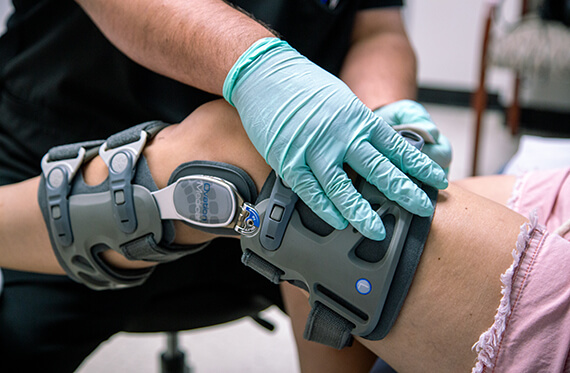
“You want to move it,” Wilk said. “You don’t want to just splint it or put it in a brace and walk around with a slightly flexed knee.”
Using crutches can be helpful, primarily to protect the knee and to inform others that you are dealing with an injury, and they should be careful in your presence.
How long surgery occurs after diagnosis varies. Part of that timeline is determined by the schedules of the patient and the surgeon. Some of it, however, comes down to a surgeon’s preference. Some want to perform surgery soon after the injury occurs; others prefer to wait a few weeks for swelling to subside. Wilk’s preference is the latter.
Possibilities for ACL replacement?
The next big decision is the type of reconstructive surgery or, more accurately, choosing which part of the patient’s body the graft will come from. In ACL reconstruction, a piece of a tendon – typically from another part of the affected leg – is removed and attached to the injured knee.
One of three options is predominantly used for replacement: a patellar tendon, which is directly below the knee; a quadriceps tendon, from the front of the thigh above the knee; or a hamstring tendon from the back of the thigh.
All have advantages and disadvantages. Grafting from the patellar tendon is the most common, especially with professional or high-level athletes, because the healing time is typically the shortest. Additionally, using bone plugs from each side of the tendon anchors the new graft and helps better ensure it will not move out of position. The primary negative is the patellar tendon is located below the kneecap and its removal can cause ongoing discomfort, especially for those who are prone to knee pain or who bend and kneel frequently.
Using a quadriceps graft in reconstructive ACL surgery is increasingly common, because the quad tendon is strong and accessible. However, because one side of the graft is soft tissue, it takes longer to heal to bone. Since high schoolers should not be rushed back to competition, this may be a good fit for those athletes.
The third option is taking from the hamstring, but this can be problematic for female athletes, who need strong hamstrings to help prevent the tibia from moving forward. Grafting from that area lessens what often is a weak region for girls and women.
Surgeons typically have their preferred method, but will discuss options with patients, who, in turn, can seek out another physician if they are set on a particular graft location.
What’s the ACL surgery recovery timeline, please?
One of the most common questions when an athlete suffers an ACL tear and chooses surgery is, ‘When will I be back playing?’ Sometimes, that’s the only thing an athlete wants to know.
The answer varies depending on the type of surgery, what other damage has been done to the knee, what is required by the athlete’s sport of choice and, perhaps most important, the patient’s access and dedication to the rehabilitation program.
“The philosophy of ACL rehab and return to play has changed dramatically. In the past, it was almost a race in a lot of people’s minds. If you went back fast, a rapid return, you were (tough),” Wilk said. “Now, it’s, ‘OK, we are interested in the big picture. Not just your first year back, but you want to have a good knee five years, 10 years later.’ So, I like that. I like that a lot.”
Wilk, like many in his field, is a proponent of rehabilitation before surgery, or prehab. Any work that can be done before a surgical procedure, specifically with a trained physical therapist, pays dividends once post-surgery recovery begins.
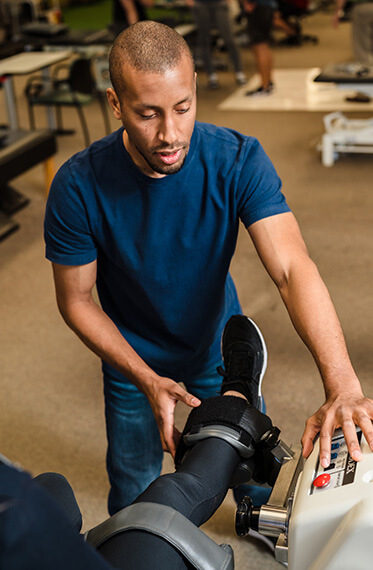
“If you go in to surgery stiff, you’re really highly likely to lose motion and end up with a stiff knee later, which leads to prolonged rehab and, potentially, a second surgery,” Wilk said. “So, the prehab or pre-surgery rehab is really, really important.”
Taking six months from surgery to return to sport was once the guideline for torn ACL recoveries. With more information and data regarding safe returns, Wilk said six-to-nine months is now the standard, and that can stretch to 10-to-12 months in some instances.
The timeline can be altered by multiple factors, including additional damage to the knee such as a tear of the meniscus, the cartilage that cushions the knee joint. Approximately 70% of ACL tears are accompanied by additional knee damage; 100% of all ACL tears also include a bone bruise, a contusion that can cause future joint damage if it doesn’t heal properly.
Going through recovery for ACL tears
Taking a steady and regimented recovery approach is recommended. Wilk likes to start with three physical therapy sessions per week post-surgery to work on returning motion to the surgically repaired knee. That can taper to two or fewer sessions per week if the athlete sticks to the home plan assigned by the therapist.
“I tell people: ‘This is a big commitment,’” he said. “‘You’ve got to do your homework, and if you’re starting to get stiff, we’ve got to get you in maybe three times a week. Once we get your motion back, you can start to do some things at school, the fitness center or health club.’”
Typically, insurance companies don’t cover nine months of rehabilitation, and so after a certain number of treatments, usually three-to-four months, athletes often must look for other alternatives. The good news, Wilk said, is there are viable options to fill those gaps.
The first, Wilk said, is to get a physician involved to prescribe more visits. If that can’t happen, the care plan can be handed over to an athletic trainer at the athlete’s school, but the effectiveness of that depends on the clinician’s availability.
One emerging opportunity is for athletes or their parents to cash pay – or private pay – for physical therapy services. The advantages include scheduling flexibility that’s not controlled by insurance companies and the ability to stick with an established, clinician-athlete relationship.
If there are economic concerns, physical therapists can work with patients to reduce their number of weekly sessions while providing dynamic home care plans as the months progress. So, the athletes remain under the care of a trained clinician, perhaps once a week at a center, and receive updated plans while staving off any boredom that occurs during the lengthy recovery process.
Hopefully, one and done
Wilk believes one of the leading causes for a high recurrence rate in ACL tears among athletes – ranging from nine to 25% depending on sport, age and other variables – is the period between prescribed physical therapy sessions expiring and a full return to sport, which can span several months.
He believes it is imperative for an athlete and a clinician to keep working together throughout that drop-off.
“If I put you on a program at 12 weeks and you are doing the same thing at home at 22 weeks, well, one, that’s not good for you. And two, you are probably not doing it because you got bored,” Wilk said. “If I keep tweaking it, if I keep making it a little different and challenging your neuromuscular system so you get better balance, better control, better body awareness, I strongly believe you’re less likely to sustain that second injury.”
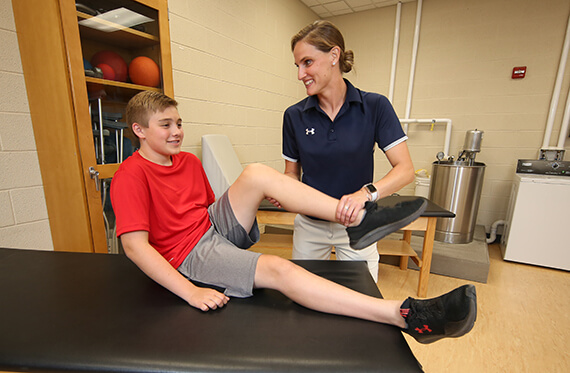
There is also another major benefit of having hands-on instruction throughout an ACL recovery: mental support. Oftentimes, patients dealing with ACL recovery are attempting to leap psychological hurdles as well, including lack of confidence and fear of ACL re-injury.
Recovery is a grind, and it’s easy to get discouraged during the tedious process without the thrill of competition. That’s where trained therapists play a huge role, not only in making sessions challenging, but also providing encouragement along the way.
“It is a buy-in. Everybody’s got to buy in. Everyone’s got to be committed,” Wilk said. “The therapist, a lot of times, has got to get these people going. … You’ve got to be a cheerleader: ‘Now’s not the time to quit. You haven’t gone this far to give up. Now’s the most important time.’”
Ultimately, how smoothly an ACL reconstruction recovery goes is largely dependent on the commitment of the individual and how much he or she puts into the process. But the partnership between the physical therapists and the athletes can make a major difference in a full recovery.
Our team is part of the Select Medical Outpatient Division family of brands.