Articles
Jan 26, 2026
Jump Starting Total Knee Replacement Recovery with Neuromuscular Electrical Stimulation
Knees help you stand, move and balance – they are also one of the most common places for injury and chronic pain. When the pain, often caused by forms of arthritis (osteoarthritis, rheumatoid arthritis, arthritis that forms as a result of post-traumatic injury) or deformity, becomes life altering, total knee replacement can be life changing.
What if, after knee replacement, there was something that could increase recovery, giving physical therapy the power to bring out the best in your new joint? Well, there is. It’s called neuromuscular electrical stimulation (NMES), and when used in the early weeks after surgery, can give you a jump start in muscle recovery, strengthening and regaining movement.
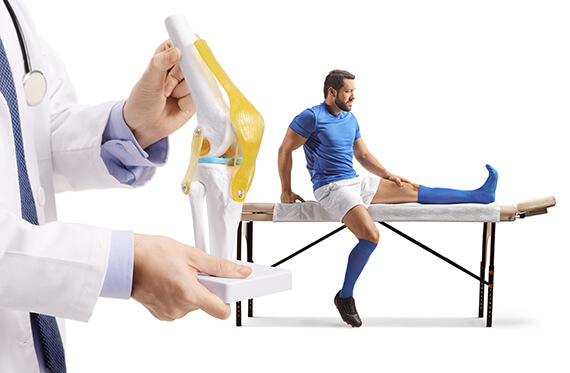
What is NMES?
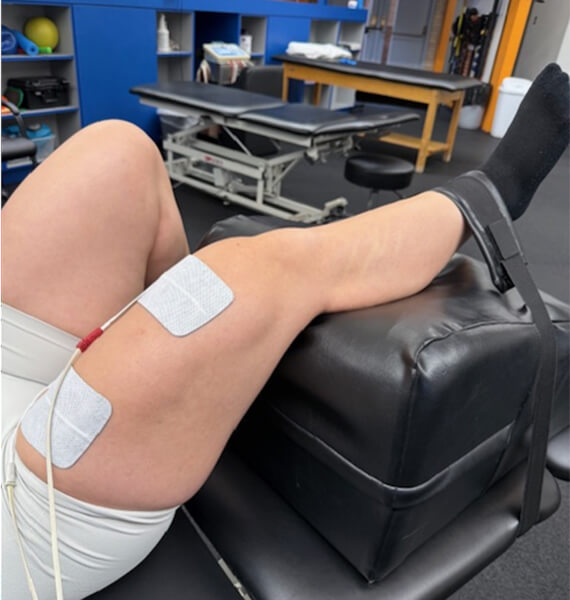
NMES delivers controlled electrical impulses to targeted muscle groups through electrodes placed appropriately on the area of concern (in this case, the quadriceps or front thigh), activating weakened muscles — stimulating the fast-twitch power fibers of the quadriceps, which are often compromised post-surgery.
Delivered by a qualified physical therapist, the electrical pulses of NMES may sound like a shocking solution at first, but as part of a comprehensive joint health rehabilitation plan is another tool to get you back to life.
How does NMES work?
A knee replacement surgery reshapes and resurfaces the bone with metal and plastic implants, replacing damaged cartilage. As a result of this procedure, the tissue, nerves and muscles receive what the body sees as an injury and naturally responds by protecting itself. Post-surgery, individuals can expect numbness/tingling from nerve healing, potential swelling/inflammation, stiffness and pain, muscle weakness and functional impairment.
Following surgery, physical therapy steps in to help you regain strength, movement and range of motion. In a rehabilitation program that includes electrotherapy, your therapist uses a control board to send impulses through electrodes placed on the skin of the thigh to nerves which causes the muscles to contract. Your therapist will often ask you to perform movements that target the quadriceps to optimize the receiving of those impulses, making the body relearn what is needed to make functional movement possible.
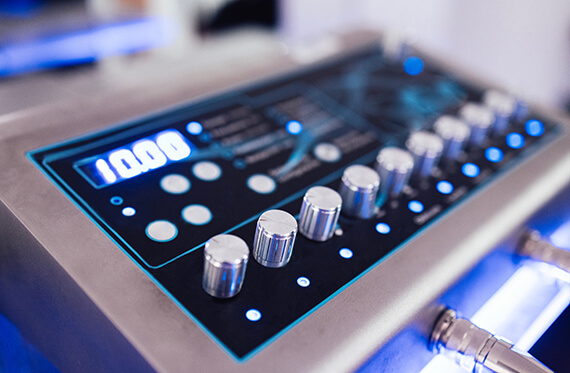
The electrical stimulus directly tells muscle when to turn on. When the muscle is on or forcibly contracts, the fibers start to communicate with one another. These fibers are important to maintain because they are the ones that come on to do powerful things like getting you out of a squat, taking your body weight up steps, giving you the ability to climb a hill or lift a weight.
In addition, NMES contraction with force right after surgery assists in creating a vascular pump. When the muscle squeezes, all of the infiltrates from surgery — the inflammation, the fluid, the white blood cells that have rushed to the injury to protect it — get pushed out of the tissue and enter the body’s network of veins where they can be eliminated from the body, leaving only healthy tissue behind.
Does electrical stimulation hurt?
People perceive pain in different ways, but treatment is generally well tolerated. As the machine turns on the tingles are light. Those sensations become more pronounced as the charge ramps up and gets strong enough to begin treatment. Once treatment begins, the current is the right intensity to produce an effective muscle contraction and the physical response changes to what people describe as feeling like a strong cramp. The machine then alternates between periods of muscle contraction and rest for the duration of treatment.
Benefits of NMES in knee replacement recovery
- Fights weakness: Surgery causes quadriceps atrophy (wasting or shrinking of tissue); NMES helps maintain muscle mass and strength early on.
- Speeds up recovery: Accelerates getting back to activities like standing, walking and climbing stairs.
- Provides pain relief: Can play a role in pain relief.
- Activates muscle: Creates strong contractions even when you can't voluntarily move the muscle well due to pain or restrictions.
- Reduces inflammation: Can help reduce inflammation by improving circulation and decreasing swelling, particularly after injury or surgery.
NMES as part of a knee replacement post-surgical therapy appointment
NMES generally starts in the first two to four weeks after surgery, once any nerve block has worn off, and continues two to three times a week depending on how tissue responds and how the stimulation is being received.
Physical therapy is essential after a knee replacement. In an ideal therapy session, NMES is used in combination with traditional rehabilitation methods, which generally produces significant results in six weeks.
While every therapy care plan is individualized to you and your goals for living post-knee replacement, there are a few common components.
- Warm up: The best results are achieved when the body is ready to receive exercise. To prepare your body for what you will be asked to do by your therapist, a warm up of some sort will be introduced at the beginning of your session. This could be on a recumbent bicycle, NuStep or maybe a seated bicycle — an activity designed to prime the body through blood flow and muscle warming.
- NMES: Move to the table, a bolster is placed under the surgical knee and electrodes are placed appropriately on the leg to stimulate the quad muscle group. During each electrically-stimulated contraction, you may be asked to tighten the quad muscle or kick into extension to get the most out of the muscle movement.
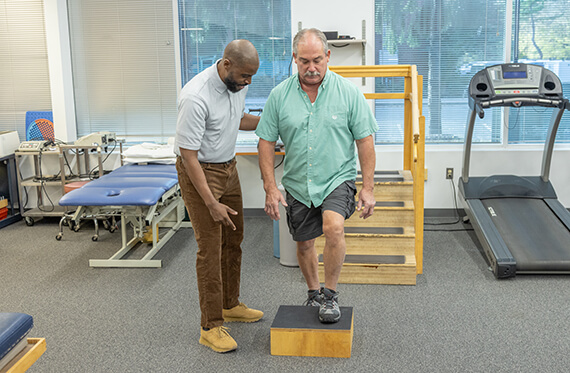
- Therapeutic exercises: Remove NMES equipment, rise to stand at the table. Your therapist will ask you to do a series of movements to get weight into the operative limb. This could include standing weight shifts, sidestepping the countertop, heel and toe raises or, if appropriate, a body weight squat down to the seated position or sit-to-stands off of the table.
- Manual therapy/stretching: While everything is warmed up and the muscles are in a more turned-on condition, your therapist may use manual therapy and/or stretching to gain motion.
- Ice down: If needed, your therapist may apply ice for recovery (a common treatment for inflamed areas including muscles and joints).
- Homework: You can expect to leave with homework. In between therapy sessions, progress is maintained by doing two or more exercises at home. Ideally, the exercises chosen are ones you enjoy doing or are aimed toward one of your goals, such as being able to climb stairs.
Who does not qualify for NMES?
Electrostimulation can be used on people of all ages to encourage a faster knee replacement recovery, however there are a few exceptions. It is not recommended for individuals who:
- Have a pacemaker
- Have areas of active tissue/joint infection and devitalized skin
- Are unable to comprehend instructions and provide feedback (children or those impacted by dementia)
- Are pregnant
- Have a peripheral vascular disease
- Have experienced injury and damage to the spinal cord and may not have an intact neurological system
NMES as part of a comprehensive joint health program
A strong joint health program works with you to manage osteoarthritis early on and as the disease progresses. When you reach the point of needing joint replacement, the program adjusts to prepare for surgery through prehabilitation – a stronger in, stronger out approach.
What do you need to know when facing a total knee replacement surgery? Find a program that offers every opportunity for post-surgery success.
Our program uses a modality-right approach, where physical therapists take their specialty-training and expertise to the next level in planning your return to life after knee replacement. They look at who you are now, where you want to be after replacement and use the best tools in their toolbox to help you reach your goals.
NMES plus exercise can be the right combination of tools in taking your healing to the next level.
Clinical contribution to this blog provided by Physical Therapist Chad Thompson.