Articles
Oct 6, 2025
Rehabilitation as a Compass on the Breast Cancer Journey Road Map

Breast cancer is a journey no one chooses. From initial diagnosis, during active treatment and through every phase of survivorship, breast cancer will always be part of a person’s life and story.
Every part of a cancer medical team is important while going through the experience and cancer rehabilitation experts can serve as a compass on the road map of that journey. Looking at function throughout the entire experience, cancer-trained therapists serve as a continuous thread of support, helping individuals navigate from one destination to the next.
The journey begins
Adding rehabilitation to your cancer team after diagnosis can be a turning point in preparing for what lies ahead. After your oncology medical team members decide how they are going to approach your individual breast cancer and what components of treatment will be part of your plan, our cancer rehabilitation experts look at how your body will be impacted and what you need to do to prepare for the best results.
Traveling companions — getting to know you
Meeting your cancer rehabilitation team as you begin your journey sets you out on the right foot. We get to discover who you are. We learn more about you — health history, what your activity level is, current strength status, what brings you the most enjoyment in living — and get an idea of your functional priorities as we move along the care path that has been set for you. Most importantly, we set goals that serve as focal points. These motivators are used to guide progress as we move toward your future after breast cancer.
In addition, we have open conversations about what may happen during treatment, answering questions along the way. Things go much more smoothly if you know what to expect. Consider us your tour guide — full of knowledge and experience, and willing to go the extra mile to get you any information you may need.
Know the distance
Part of knowing how far we’ve traveled is having a good starting point. At your first appointment, our specially-trained cancer rehabilitation therapists take measurements that will be essential for mapping progress. During your therapy, these same measurements will be taken multiple times to see if we’re on track, where we need to concentrate our attention or where we need to make adjustments.
These objective assessment points include:
- Shoulder range of motion
- Strength
- Arm circumference and volume measurements
- Shoulder function and capacity
- Tissue consistency
- Sensation
Preparing for the trip — packing the body with strength
Breast cancer can include a variety of surgical interventions (biopsy, lumpectomy, mastectomy, revision, reconstruction), all of which can impact movement.
Based on what we learned about your strength during our get-to-know-you session, we may do prehabilitation or prehab. During these appointments, we build up strength in the areas that will be impacted the most by breast cancer surgeries or even treatment needed prior to surgery.
One thing we know about going through treatment like chemotherapy or surgery is that you’re going to experience a dip in how you function. By working through prehab sessions, we are building up strength so the dip is smaller. This allows for recovery from the best possible starting point, giving you a head start in the recovery process.
Navigating healing
Post-surgery, the cancer rehabilitation team steps back up to the plate after your cancer medical specialists have cleared you for movement. Your oncology-trained therapists set into motion exercises to help you progressively resume all activities of daily living at a safe pace.
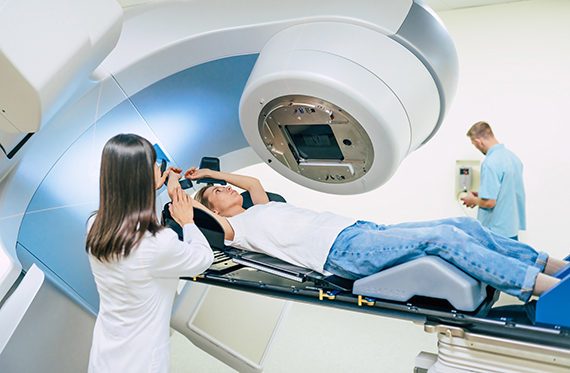
- Shoulder range of motion – Decreased shoulder motion is a common result of procedures for breast cancer. Working on shoulder motion is important for resuming normal activities. Additionally, full shoulder motion is often required for radiation treatments where you’ll be positioned with your arms above your head for an extended time while the radiation is being administered.
- Scar tissue – Scar tissue is the natural way your body heals itself. Sometimes scars can feel tight or limit your movement. Through manual therapy/scar mobilization, stretching and range of motion exercises, your therapist will address scar tissue that may develop after your procedure or radiation treatment. Our therapists teach you how to do self-massage at home in between sessions to keep scar tissue managed. We’ll talk through what you’re seeing and feeling — empowering you to see yourself positively through your healing.
- Lymphedema – Any disruption to the lymph nodes can impact the efficiency of the lymphatic system. The main risk factors for developing breast cancer-related lymphedema are more than five lymph nodes removed, radiation to the area, being on a taxane chemotherapy, a high Body Mass Index (BMI) or infection.
When the lymphatic system isn’t working properly, limbs swell. Here’s where pre-operative measurements come into play. The arm numbers (girth and volume) are revisited post-operatively to monitor swelling. Nobody wants to get lymphedema. It is a risk of breast cancer. The earlier it is caught, the more treatable it is versus trying to play catch up later. Rehabilitation can help with lifestyle education and weight training exercises designed to keep your lymphatic system healthy.
Through cancer rehabilitation, therapists educate on what to watch for as symptoms and signs of lymphedema (examples are one limb visibly larger than the other, a heavy or full feeling in the arm, one side feeling more tired than the other, a shirt feeling tighter on one side). Anytime you feel something is changing, asking your therapist to re-evaluate through measurements and assessment is vital to managing lymphedema.
- Fatigue/cognitive impacts – Cancer and its treatments (chemotherapy, radiation, hormone supplements) can cause fatigue and interfere with thinking patterns. Many times patients will express a feeling of “brain fog” or say they have “chemo brain” when thinking isn’t as rapid as it was pre-treatment or feel like thoughts don’t connect like they should. Therapy can address this through brain exercises, strategies to improve thinking or adapting through work-around activities.
- Numbness and tingling – Some types of chemotherapy can cause numbness and tingling. This sensation interruption, especially when it is experienced in the feet, can increase fall risk. Your therapist can address those issues, reducing the chances of falling.
- Pain management– While rehabilitation experts don’t prescribe pain medications (that is done by other vital providers of your cancer care team), they can teach you how to move in ways that reduce the amount of pain you are feeling. One way your therapist can help is by teaching you diaphragmatic breathing that can help you work through episodes of pain, shortening them or lessening the level of pain you are feeling in a given moment.
Your map is your map
Here is the important thing to remember. Your individual breast cancer is your map. It can look different from someone else’s because it is catered specifically to your cancer treatment plan, what you love to do and the goals you’ve set with your therapist.
Movement is medicine in many ways and a cancer rehabilitation therapist understands there will be days when you feel more motivated to move than others. Many therapy experts will create several different plans for you to do at home – a light, moderate and robust routine to have in your at-home toolbox. On good days you may choose to do a more robust part of the plan with targeted exercises and longer walks, and on not-so-good days you may just choose to do light exercises or small walks. Any movement is better than no movement.

Alternate routes
Along the way, each person is going to come across conditions that were not anticipated. Your established relationship with a cancer therapist gives you the opportunity to talk about issues or concerns whether directly related to movement or not.
As part of your cancer care team, therapists have the ability and established relationships to consult with other members of your medical team, opening up paths for care that address physical, emotional and mental roadblocks.
Integrally tapped into resources, your cancer therapy guide can get you where you need to be or alert you to opportunities you didn’t know existed to take your care to the next level.
Community stopping points
A side benefit of making cancer rehabilitation part of your breast cancer journey is not only getting help from a therapist trained in the side effects of cancer on the body, but coming to a center and seeing others making progress.
Whether doing their own therapy plan or sitting in the waiting area, there is opportunity to connect purposely or organically with others who are also traveling a journey with cancer.
Beyond the destination
Often, after the breast cancer destination is reached and you are out of active treatment, latent effects may pop up. Cancer rehabilitation is available in those instances.
Because breast cancer treatment in many cases includes anti-estrogen medications in the long term, introducing medical menopause, it is possible to experience joint pain, hot flashes, difficulty sleeping at night and pelvic health issues to name a few. Any side effect can be addressed with a rehabilitation specialist as they happen, during active therapy or after being discharged.
Your therapy has no timeframe, it’s there when you need it.
Including a Strength After Breast Cancer (SABC) programwhen nearing the end of active treatment is a perfect addition to the trip. This research-based, exercise program is safe for the body and takes into account the whole body. Cardio, stretching (full, upper and lower), core work and strengthening are all part of SABC.
Designed primarily to keep lymphedema at bay in the future, SABC helps you return to your previous activity level at a comfortable pace without overloading your system to regain strength, endurance and quality of life. As a bonus benefit, exercise has also been shown to reduce cancer recurrence rates, boost mental health, improve bone density, reduce body fat and promote positive body image.
Knowing the itinerary helps guide the way
Throughout the entire cancer journey itinerary set by your oncologists, cancer rehabilitation therapists travel with you. There is comfort in knowing not only your cancer treatment plan, but also what to expect along the way, preparing as needed for the smoothest trip possible and using your therapist as a partner to conquer every curve in the road.
Clinical contribution to this blog provided by ReVital Cancer Rehabilitation Program Director and Physical Therapist Jodi Deistler.