Articles
Nov 4, 2025
Tackling Turf Toe: What it is and Why it Hurts so Badly
It may have the most unassuming name of any painful injury.
Turf toe.
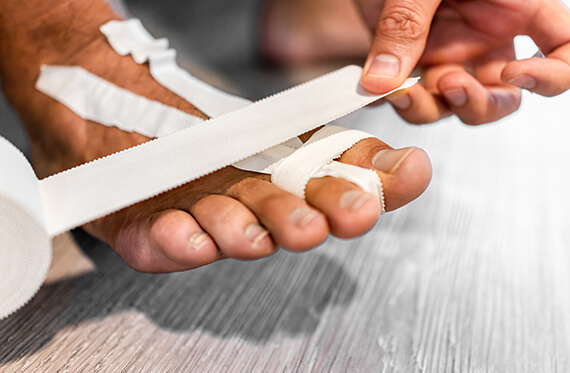
It sounds like you scraped your piggies along the ground. Poor baby.
It seems even more ridiculous when professional athletes such as star NFL quarterbacks Joe Burrow and Brock Purdy miss weeks or months of games with the ailment.
Three months on the shelf with turf toe? Really?
Well, as retired NFL center Jason Kelce said recently about turf toe on his popular podcast, New Heights: “It might have a silly name … ain’t nothing silly about it.”
The truth is turf toe can be debilitating, especially for athletes who continually plant and push off with their feet. Soccer, lacrosse and field hockey players, baseball pitchers and, yes, quarterbacks, among others, can be severely restricted by turf toe.
There are ways to ease the pain and return to the game in short measure, including physical therapy that can help strengthen the affected area and potentially stave off surgery.
What is turf toe?
In simple terms, turf toe is a hyperextension of the big toe, causing disruption or damage to the ligaments and tissues that support the big toe joint. The severity can range from a grade 1 sprain that may require only rest and rehabilitation to grade 3, indicating a complete ligament tear and, most often, surgery.
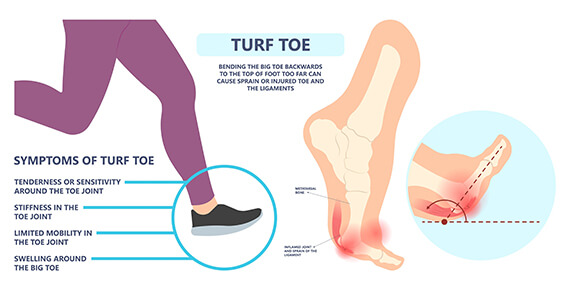
Regardless of the grading, turf toe is both painful and limiting because it’s extremely difficult to get around without using your big toes. They act as balance points for walking and running, and they must be able to stretch upward at the end of each stride.
If that stability is compromised, and those ligaments are significantly stretched or torn, being able to effectively propel or back-pedal or plant becomes a significant challenge.
Why it’s called turf toe
Turf toe is an outdated term that came into vogue in the 1970s, when artificial turf placed on top of concrete became more prominent in field sports such as football and baseball.
Turf was billed as easier to groom and maintain than grass surfaces, particularly through rain and other weather events. But it didn’t have the same give, putting more pressure on the foot – and specifically the big toe – when pushing off.
Sports turf has evolved over the years, and has disappeared in some venues, but turf toe has remained. It happens on multiple surfaces, particularly when there is constant repetition of planting, jab stepping and running. Those repetitive motions can lead to overstretching and, consequently, the tearing of ligaments.
Another potential culprit that keeps turf toe alive in the 21st century: Cleats. They often bend at the toe box – or top section of the shoe – and are stiffer below that point. This limits support of the big toe and can leave it susceptible to overextension.
The best way to avoid the added risk is to wear game cleats with stiffer soles while making sure they fit correctly – not too tight or too loose.
Turf toe treatment depends on the injury grade
How a turf toe injury is treated has a lot to do with its severity, which can be determined through an initial review by a physical therapist or athletic trainer and, ultimately, confirmed by imaging such as an MRI.
If it is grade 1, and there doesn’t seem to be major bruising or instability, only noticeable big toe pain , the treatment can be geared toward getting the athlete back on the field quickly.
Usually with a grade 1 sprain, the athlete will miss minimal time, roughly three-to-five days, although not resting or rehabilitating can lead to a more significant, future injury.
Grade 2 typically signals a partial tear and the need for immobilization, such as an orthopedic walking boot or a protective cast shoe for a few weeks before progressive weightbearing and strengthening begins.
Athletes with this strain are typically away from competitive play for four-to-eight weeks. Increased weightbearing and strengthening will begin around the second week, depending on what can be tolerated.
Although those dealing with a grade 3 turf toe can try conservative management initially, typically this diagnosis means there is a full tear and will require surgery. When this occurs, the timeline expands to three months or more, which, in many cases, equates to a season-ending injury.
These patients are usually immobile for four-to-six weeks before slowly starting to bear weight at some point between six-to-10 weeks. Rehabilitation after surgery averages 12-to-20 weeks.
How does one rehabilitate a turf toe injury?
To go with the silly name is the silly image of a strapping athlete sitting on a table and moving one toe for an hour. That’s not how it works.
Physical therapists may suggest an exercise that isolates the flexor hallucis longus, the muscle that is responsible for flexing the big toe, but that’s a small part of the rehabilitation plan.
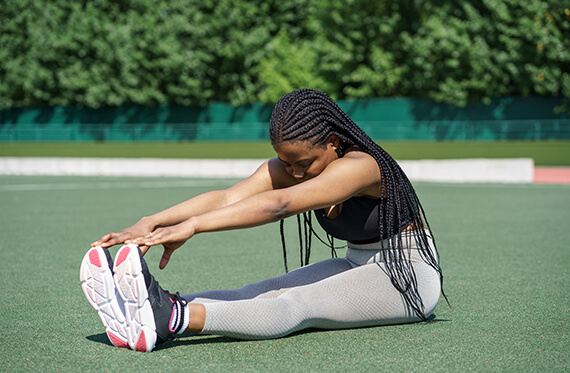
When returning from a turf-toe injury, patients, once they can bear weight, will often participate in conventional exercises such as squats and leg presses. But the focus will be on keeping the injured foot flat while concentrating on positioning to best activate the muscles at the bottom of the foot.
Calf raises and other exercises to improve the big toe’s range of motion slowly will be added, but the focus will remain on not overextending the toe, since that’s what led to the initial injury.
Ultimately, sports-specific drills will be incorporated to prepare for a return to play.
Athletes are encouraged to talk with a physical therapist or an athletic trainer prior to injury to learn how to properly align feet during traditional lifting exercises to strengthen those muscles and potentially prevent toe joint pain.
What can be expected from Burrow, Purdy and other athletes after turf-toe injuries?
The good news is once rehabilitation is complete and an athlete is cleared to play, athletes should be able to return to previous form. It just takes time. A quarterback might have to rebuild speed and adjust footwork initially to take some load off the healed toe, but mobility and the ability to plant should return.
The biggest key is athletes trust their physical therapists and other medical personnel, and don’t attempt to rush back to the field too quickly. If the stretched or torn ligaments and tissues aren’t fully healed, a relapse is not only possible, but likely.
Purdy, the San Francisco 49ers starting quarterback, has learned that lesson the hard way this year. Although the severity of his turf toe injury was never made public, he suffered it during the first week of the season. He missed two games, returned in Week 4 and re-aggravated it. He has missed several more contests but hopes to play again relatively soon.
Burrow, the Cincinnati Bengals’ franchise quarterback, fully tore ligaments in his left toe during a Week 2 game. He had surgery four days later for the grade 3 issue and is expected to be out until at least Week 16 in mid-December. That would give him three games left to play in the 2025 regular season.
With the Bengals struggling without their star and not likely to make the postseason, it’s possible they decide not to push him at all in 2025 and, instead, get Burrow healthy for next season.
Burrow’s injury was a tough blow for a team – and fantasy football owners – that had high expectations this year. It, however, put a spotlight on a serious injury with a silly name.
One that, if properly rehabilitated with rest, hard work and physical therapy, can be overcome, allowing athletes to put their best foot forward once again.
Clinical contribution to this blog provided by Physical Therapist Ashley Brandish.