Articles
Feb 13, 2026
Think You Have Tech Neck? It’s Likely a Larger, Muscular Issue
You have been hearing about tech neck for a while.
That 21st century, self-created malady that arises when you, me and everyone spend too much time staring at phones, laptops and other screens. Your upper spine is languishing in a constant downward position and the muscles in your neck start barking, creating that rhyming tension knows as tech neck.

Well, there is some good news: Tech neck is not causing your upper spine and neck issues.
Simply because you look at your devices too often and not at sufficient eye level does not mean you have jumpstarted a literal pain in the neck that is now a significant problem.
Now, the bad news: Tech neck is simply a symptom or indicator that you have a weakness with your inner neck muscles, an ongoing condition that won’t fully improve until you treat that deficiency specifically.
If your neck or shoulders hurt when you stare too long at a screen, if your dealings with stress manifests in your upper torso or if you move your head a certain way and there’s pain, it’s a sign of something more daunting.
Your neck muscles need to be properly conditioned and strengthened.
Or you’ll continue to have occasional neck flareups from various bad habits.
Muscle sleeves working – or not working – together
There are two sleeves of major muscle layers in the spine: The superficial layer, a large-muscle group that produces about three-quarters of torque generation in the neck; and the deep layer, which is underneath the superficial muscles and surround the vertebrae. Its purpose is to keep the vertebrae from sliding or moving around.
When a neck is healthy, the inside layer stabilizes the vertebrae segments and the outer layer does the controlled motion – or heavy lifting, in a sense – as they work in concert.
In many of our necks, however, that inner layer weakens and becomes inhibited, doesn’t support the vertebrae and doesn’t want to slide easily. And so, the outer segment overcompensates and becomes tight and overextended.
That makes your neck feel locked and tense; your movement becomes limited and/or painful. It’s an extremely common occurrence.
Roughly 30 to 50% of adults experience neck pain annually, according to the National Library of Medicine.

The unique thing about neck pain is it seems to come and go, and so people often think it is a temporary issue. It isn’t.
What happens is movement becomes limited, pain arises and inflammation occurs. Then you seek temporary treatment, whether it’s ice, heat, massage, rest, whatever. Ultimately, the inflammation dies down, the muscles become less taut and the pain dissipates.
But the issue itself – the weakening of that inside layer of muscles and the instability it causes – does not go away. It’s just waiting for the next episode, such as sleeping awkwardly or lifting weights improperly or, yes, staring at a screen too long.
Studying the tech neck phenomenon
A 2025 Brazilian study, in which 396 men and women between the ages of 18 and 65 were examined twice in one year for neck pain and cervical mobility while sitting and standing using smartphones, revealed some interesting nuggets.
Only 10% reported neck pain and there was minimal regression in cervical movement during that year among the study’s participants. It concluded that smartphone usage/positioning was neither a risk factor for neck pain nor increased the frequency of neck pain.
Furthermore, the study suggested lack of quality sleep, or an insufficient level of physical activity, is more likely to contribute to neck pain than tech neck.
It all goes back to those muscles surrounding the vertebrae and how strong and dynamic they are. If they have been weakened by time or a traumatic incident, the only way to improve neck function is to work to rebuild the strength of the deep layer of muscles.
And that takes a nuanced approach from a neuromuscular expert.
So, what should you do when you can’t quite kick neck pain?
Get your neck pain checked out now
The first thing to do is get the discomfort checked out instead of hoping it goes away.
Because most times it will go away – when the inflammation subsides – only to return later. That’s because it’s not just a “crick in the neck.” It’s deeper.
Stopping that cycle is key, which means admitting to yourself there may be an issue even when your neck isn’t hurting like it had been. Even neck stiffness can be a warning sign, and one that can lead to other issues such as shoulder discomfort if left unevaluated or untreated. Consider that roughly half of those who have rotator cuff tears also have experienced some form of degenerative changes in their neck.
A motor-control expert, such as a physical therapist, can evaluate neck issues by testing of range of motion, strength and motor control. Specific treatment will depend on what those tests reveal and how much discomfort you are experiencing.
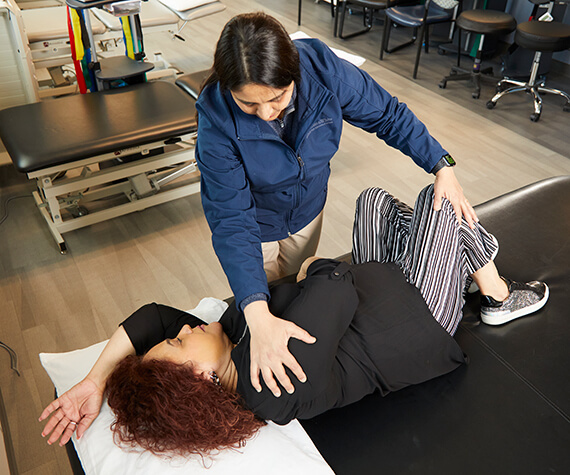
If you have neck issues and want to do whatever is possible to limit future problems, expect to undergo a multi-faceted treatment plan.
What you can expect
If you enter a physical therapy center with significant neck pain, the first step is to work on decreasing its intensity. Likely that means manual therapy treatment, such as targeted, soft tissue massage (pressure to muscles and soft tissues), joint manipulation (pressure to joints) and joint mobilization (twisting or pulling of joints and bones into proper position).
Manual therapy should be combined with completing home-exercise plans provided by your therapist to increase the motion in your neck.
Once the pain is gone, therapists will concentrate on the exercise component, both a general aerobic one and a more targeted one for the muscle layers around the vertebrae. That will consist of exercises that target neuromuscular control while training the inner layer to more effectively do its job of keeping the vertebrae from sliding, in turn taking some of the load off the outer muscular layer of the neck.
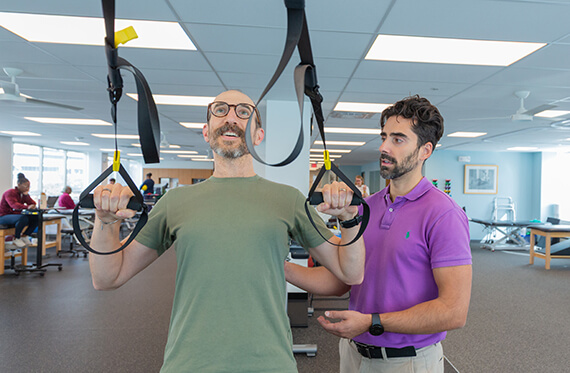
The next phase is a practical one: Adding in the components of everyday life to help patients have a functional return, whether that’s how to properly carry a laundry basket down steps or how to lift heavier weights safely at your job site.
There will also be discussion and education on things we may not have given much consideration to previously, such as getting proper rest, managing stress and not putting the upper part of the spine into positions that could aggravate pre-existing issues.
Targeting a healthy life
The bottom line is that neck discomfort is common. And there are many things we do that can exacerbate an underlying weakness in our necks.
What we need to do, especially as we age, is pay attention to any spinal discomfort we may have and get help treating it as soon as possible.
The goal is to learn what to do to keep the neck muscles strong and continue doing those stretches and exercises as we age. So, if we are doing something that puts pressure on our neck muscles, like staring at our phones too darn long, it can be accomplished without pain.
Clinical contribution to this blog provided by Matt Lee, a board-certified clinical specialist in orthopedic physical therapy.