Articles
Jun 18, 2026
Why return-to-work programs matter for cancer patients
The alarm goes off and your first waking thoughts may be: “I just don’t have the strength. Everything hurts. I have no energy.” Any idea of work or activity may be exhausting.
The actual personal value of work is overlooked until you can’t do it. When cancer or other illness or injury strikes, getting back to work can mean more than just a paycheck — it can be a welcome return to a structured routine, the emotional benefit of social connection, a boost of mental well-being and the fulfilling feeling of engaging your skills or challenging your mind.
Whether work gives you purpose, promotes your professional growth or provides you with financial security – returning with strength, endurance and mobility is possible through rehabilitation.
Defining work – what your day looks like
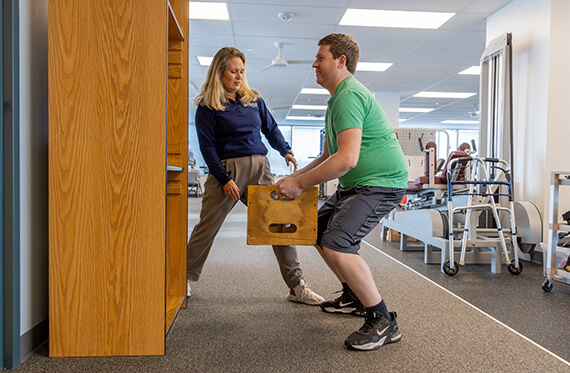
Depending on skill, lifestyle and geography, work can look differently. To avoid getting locked into a box, think of work as any purposeful physical or mental activity requiring effort to achieve a goal.
What fills a person’s day is one of the vital pieces therapists must discover to guide a work readiness journey. What does the patient’s day look like? Is it gainful employment or stay-at-home parent? Is it volunteering or creating art? Is it playing with grandchildren or taking a daily walk? Work can be anything.
For patients with cancer, chronic illness or injury, rehabilitation specialists start with distinguishing what work is for them:
- What did life look like before?
- What are you capable of doing now?
- What has injury or illness impaired you from doing?
- What do you want to get back to doing?
For those returning to gainful employment, another layer is added:
- What are the key responsibilities of the job?
- How has injury or illness impaired your ability to do that role?
- What are employer or workers’ compensation requirements for a return to work?
With those answers in hand, therapists can begin to put the pieces of the puzzle in place to prepare you for a return to work and give you a reason to find joy in the alarm going off in the morning.
Physical, psychological and emotional adjustment
Cancer as a diagnosis is an adjustment. It’s not just coming to terms with the news, but also understanding the impact it will have on the lifestyle you’ve been living. Cancer changes people to their core, physically, psychologically and emotionally.
Physically, cancer and its treatments can cause:
- Fatigue and loss of energy
- Reduced endurance
- Impaired cognitive ability to process information quickly, sometimes referred to as “chemo-brain” or “brain fog”
- Difficulty returning to previous performance levels
Cancer patients can experience frustration when unable to perform at previous levels of activity or when tasks take longer than anticipated. Long hours become more difficult to tolerate and productivity drops.
It is not uncommon for someone with a cancer diagnosis to have disruption in identity. You may struggle with accepting reduced tolerance and bandwidth to function and adjusting to a new normal. The experience can change the way you perceive yourself, your confidence and how you interact socially.
If your identity is largely tied to what is considered work in your life, any impact on how you perform that work can influence your physical, mental and emotional mindset.
It’s important to practice self-care, including having realistic expectations, as you accept change and, most of all, compassion and grace as you move through your personal journey.
Patient-centered, whole-person care
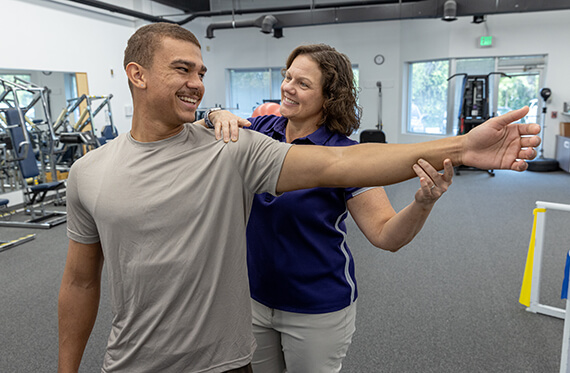
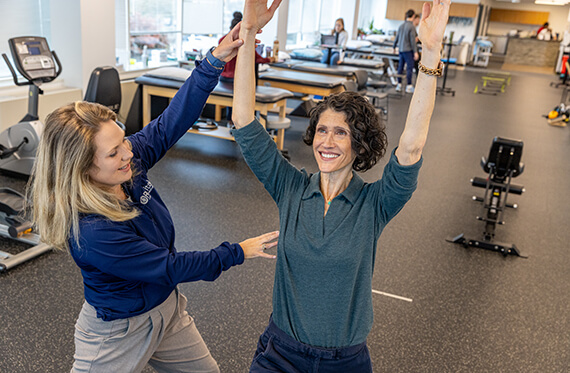
A strong cancer rehabilitation program takes a whole person approach and can include physical, occupational and speech therapy.
Healthcare often looks at what to do to help people, but rehabilitation looks at what to do for people. Recovery is active not passive, you get out what you put in and your cancer therapist serves as a coach, confidant and support system as you put in the work. Transparent communication is often the key to helping someone with cancer stay on track.
Cancer rehabilitation experts have a strong understanding of individual cancers, the treatments involved and the side effects to expect. They help you understand the type of care your cancer may require, you become an informed partner in your recovery.
Cancer and its treatments often have an impact on cardiovascular health. By working with you to understand those impacts and how to counteract or manage them. That empowerment of knowledge allows you to control your ability to return to life, with the expectation that it may not look 100% the same, but still be a strong return.
Work readiness
Whatever your work scenario looks like, work readiness is not a one-size-fits-all process. Some people are returning to previous jobs, while others are trying to build independence, confidence, routine or social connection for the first time after treatment.
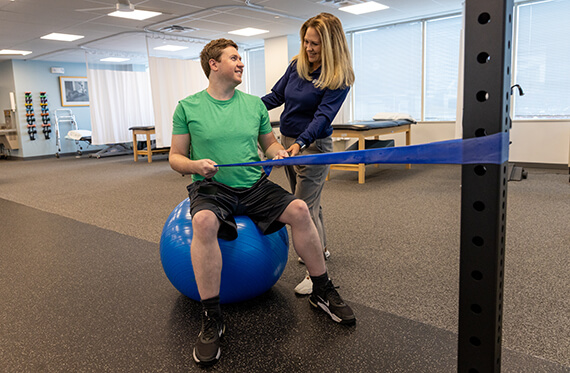
Rehabilitation includes gradual rebuilding of physical function and skill sets or adapting as needed to fulfill a previous role. You may need to start back with shorter workdays, work fewer days a week, work from home or have assistance with the portions of your work that are still too difficult to do on your own (job sharing). In some cases, you may need to work with your employer to reevaluate what you can do and adjust a current role or seek a new position that will work with your post-cancer treatment abilities.
In many cases, your therapist will ask for your actual job description so they can create an exercise program and care plan that replicates the activities that will be required of you when you go back to work.
Coming together for a safe return
It’s important for all partners in returning to work to have honest communication about:
- Expectations
- Timeline
- Limitations
Your therapist, along with your employer, can help define how you can have sustainable participation where everyone benefits. Realistic goals and guidance provide a framework for return rather than false reassurance.
Part of the work readiness team includes your family members. How can they contribute by taking on responsibilities that may lighten your load or help you as you transition back to a work routine? What adjustments can be made to help you with personal responsibilities and tasks when you may feel worn down by the energy needed to work? Finding a good balance of home and professional activities can tip the scale of success.
Having the tough conversations
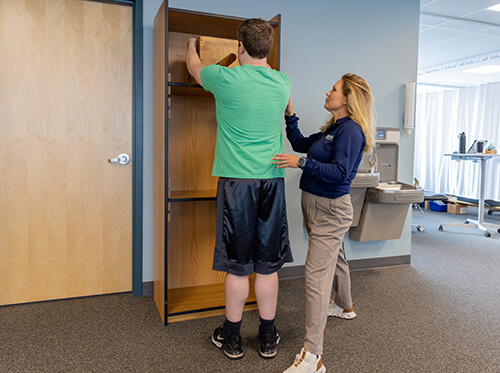
An aspect of return to work or return to activity is tough conversations. Socially, humans are creatures of curiosity and feeling. As a cancer survivor or a cancer patient still in recovery, you may find that others react differently to you or that you feel different in social situations. Everyone brings their own perspective and interactions can shift from what they were before.
People around you may be:
- Understanding and offer to help
- Reminded of a personal experience of cancer – their own or that of a loved one – stirring up their own emotional responses
- Uncomfortable in knowing what to say that is appropriate
- Curious and have a lot of questions
- Overly helpful
- Frustrated that they had extra duties when you were absent
To lessen anxiety, the best preparation for this is role playing with your therapist and/or your family to understand how these situations may feel to you and how you want to respond. Determine what you are comfortable with and if the answer is, I don’t want to talk about it, explore firm but respectful ways to express that.
Knowing when you’re ready
Cancer is an extremely personal and individualized experience. Only you can fully understand how you are feeling.
Work readiness – whatever work is for you – may look completely different on the other side of cancer. It may be a shift in perspective or ability. The goal is to rebuild purpose in life and find comfort in your new routines or activities.
If that means going back to full-time employment, switching to part-time employment, leaving employment altogether or changing your life to include more volunteer activities or time with family and friends — your journey is uniquely yours.
Cancer rehabilitation can prepare you for whatever lies ahead. Your experienced therapists give you the gifts of physical adaptation, psychological readiness, emotional coping and confidence building to get you back to what matters most.
Clinical contribution to this blog provided by Physical Therapist Sarah Kowalczk.